
Recent Posts

How to Easily Calculate Gear Ratios in Planetary Systems

Planetary gear systems can be intimidating to understand. There are so many types of motions and reductions possible that it can be overwhelming.

The motion of planetary gear systems is expressed clearly in the Plantetary Train Equation: -S/R = (ωra)/(ωsa). Once this is known, the speeds of the carrier arm, sun and/or ring can be calculated. Multiple series of planetary gear systems can be used to get multiple speeds and directions.

Planetary gear systems are used everywhere. Some examples are:

  • Automatic transmissions
  • Internal bicycle gearboxes
  • Pencil sharpeners (I bet you didn’t see this one coming)
  • Winches
  • Hand drills
  • Camera lens focusing
  • Truck differentials

Download Our Planetary Gear Calculator For Free 

Easy to use Excel Based Calculator.  Quickly calculate number of teeth on gears and output speed.  Doesn’t matter what the inputs or outputs are; it’ll calculate it.

We respect your email privacy

Planetary gear systems are primarily used for one or more of the following reasons:

  1. Reverse Motion
  2. Transmit more torque than one gear set will allow
  3. High reduction rates
  4. Use with other sets for multiple speeds
  5. Input and output need to be coaxial

Planetary Gear System Components

Planetary gears sets have 4 major components: sun, planet(s), ring and the carrier or arm. The planets are assembled onto the arm. The planets mesh with the sun and the arm rotates around and on the same center line of the sun. The planets also mesh with the ring gear.

Excited to Learn More About Gears? 

Sign up for Mentored Engineer’s FREE Comprehensive Gear Design Master Class ($500 Value) that includes his Planetary Gear Calculator ($250 Value) and weekly Mentored Engineer Newsletter

The Comprehensive Gear Design Master Class is a 17 part series of videos and text where you will learn:

  • How to size gears so they mesh
  • Calculate the stress on the gear teeth
  • Calculate gear ratios in planetary system

After completing this course you will be able to correctly design and spec gear boxes for your applications the first time.

The course and the calculator have a combined value of over $750! for FREE

We respect your email privacy

Generally, either the arm, ring or sun will be fixed in rotation so predicatable motion will occur. In rare cases, the input and output are linked together so that there is no relative motion between the sun, ring and planets. Automobile transmissions use multiple systems and sometimes the sun and the ring will turn to provide power to the arm.

Sizing the Gears

It is important to size each of the gears so that they fit properly. There are two simple formulas that will help you choose the right gears.

First off, all of the gears must have the same diametric pitch in order to mesh. Next, the following equation will relate the number of teeth on the sun, ring and planet. The variables could also represent the pitch circle of the gears, but most use the number of teeth to quickly evaluate if the meshing will work.
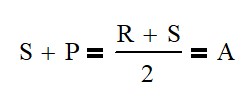
S – Sun, R – Ring, P – Planet, A – Arm

For example, if your sun gear needs 17.5 teeth from the calculation above, your system won’t work because teeth always need to be an integer. This is a little more difficult to see when using the pitch circle of the gear.

Calculating the Number of Planets

One of the main reasons to use planetary gear systems is to increase total torque. Every planet in the system adds a new path for force to flow. So where you may be limited by tooth strength, adding planets will allow you transmit the torque through multiple teeth. Genius!

Another benefit of having at least 2 planets is that it will balance the radial forces (force pushing the gears apart) on the shafts leading to smaller shaft designs.
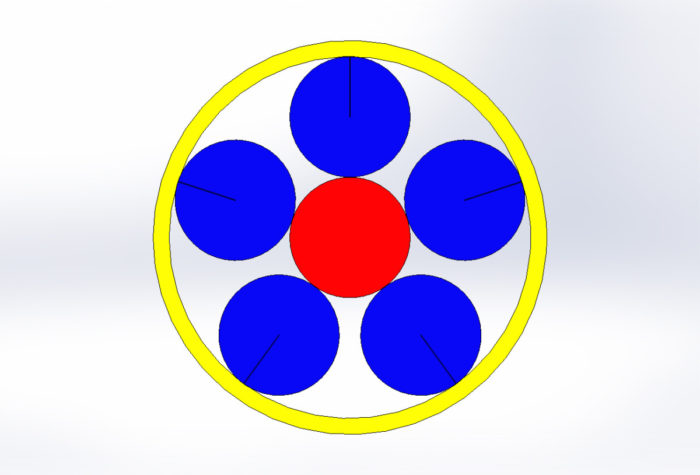
A system where S = 15, R = 45 can only support 5 planets.

The number of planets for an system is limited first by the space available for the planets to occupy. A system with a small sun and large ring will have less planets even though there is more space available than a system where the ring is only 50% larger than the sun.

The other limiting factor is the teeth meshing properly. This can be determined by the following equation.
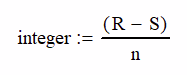
n is the number of
planetary gears

The result of this equation must be an integer for proper meshing.

A system where S = 27, R = 45 can support 9 planets.

The top example has an R – S of 30 where there could be 1, 2, 3, 5, 6, etc. planets We find out that the spacial constraint is 5 planets.

Similarly, the second example has a R – S value of 18 leading to 1, 2, 3, 6, 9 and 18 planets. This design can support 9 planets.

Calculating Motion of the Components

Generally speaking, we care about the motion of the carrier arm, the sun and the ring. Usually, one of those will be fixed, but there are many times that they may all be moving. Automatic car transmissions are a great example of this. The following equation relates all the components together.
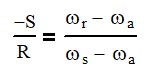
Where S is the number of teeth on the Sun, R is the teeth on the Ring, ωr is the speed of the ring (usually rpm), ωa is the speed of the arm and ωs is the speed of the sun.

For example if we take the second example up there with R = 45, S = 27, P = 9 we can find out the relationships:

FixedInput (1 rev)Output (rev)
RingSunArm 0.38
RingArmSun 2.67
SunArmRing 1.60
SunRingArm 0.62
ArmRingSun -1.66
ArmSunRing -0.60

Multiple Planetary Sets

You can also apply this in steps to get multiple reductions. For example consider the reduction a drill I recently disassembled. (R – 45, S – 9, P – 18) There are two stages in the reduction, where the arm on the first section drives the sun on the next section.
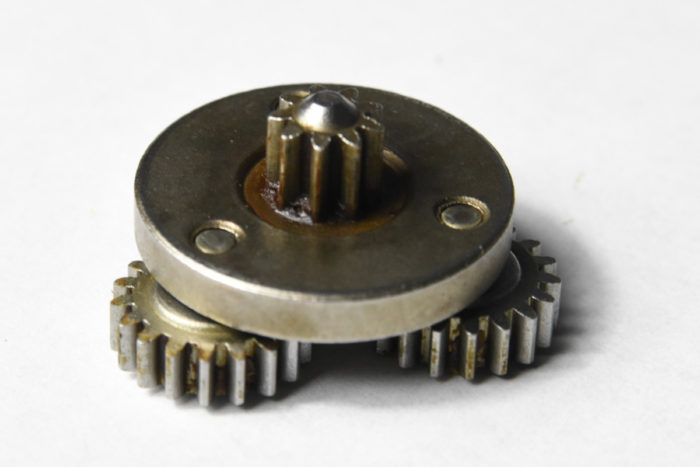
The carrier of Section 1 drives the sun of Section 2

In the drill, the ring is held fixed except when the torque is greater than the desired setting. At this point, the ring will slip and no output motion will occur.

To calculate the output speed, we will need to use the equations below. It is the universal equation used twice and the speed of the first section’s arm is set equal to the second section’s sun

Since the gears have the same number of teeth in the first and second sections, we will have the same reduction in each section which is 1 : 1/6 (input/output) or 6 input revolutions to 1 output revolution. When both sections are combined the ratio multiplies to 1 : 1 / 36 or 36 : 1. Gearbox ratios are commonly referred to as input to output revolutions.
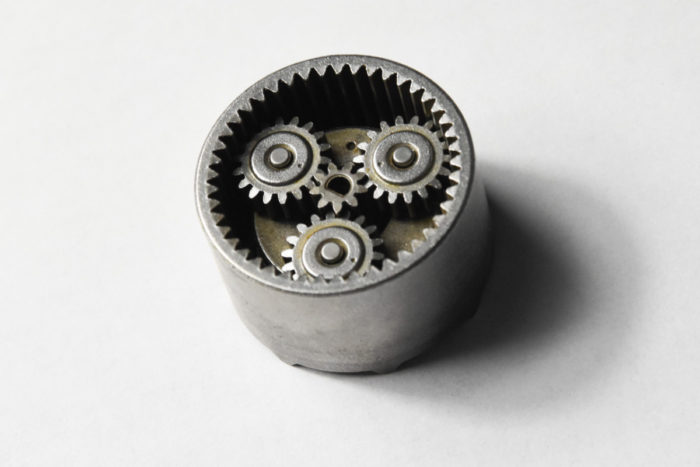
Assembled Section 1 side of planetary gearbox

Calculating Torque

This 36:1 ratio gives a tremendous mechanical advantage because it allows the use of a small and fast electric motor to have tremendous torque on the output.

The ratio of input to output (N) is 36:1 for the drill. The relationship of speed and torque can be calculated using the following equations:
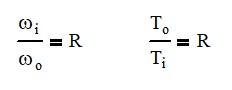
As in normal gear equations, as speed decreases, the torque increases. With normal spur gears, you can only transmit torque through one set of meshing teeth. However, you can multiply the available torque by the number of planets in the system. This is provided that the gears and other components involved have a high level of precision.

Download Our Planetary Gear Calculator For Free 

Easy to use Excel Based Calculator.  Quickly calculate number of teeth on gears and output speed.  Doesn’t matter what the inputs or outputs are; it’ll calculate it.

We respect your email privacy

Conclusion

Planetary gear systems can be intimidating, especially if there are multiple sets. Break them down into smaller sets and tackle them one at a time. Count all the gear teeth and then run the equations to confirm that you counted correctly. These systems can be simplified greatly with just a little analysis.

For Further Study

If you want know more about gear system designs, read the article below. To calculate the torque that a gear can transmit, the section on gear tooth forces begins about half way through.

How to Use Gears – What You Really Need to Know

How to Achieve High Ratio Planetary Gearboxs

All Gear Articles and Videos

Introduction to Planetary Gears

How to Attach Gears, Sprockets and Pulleys to Shafts

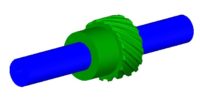
Unlike the Lego gears and shafts shown below most motors have perfectly round shafts. This makes attaching gears, pulleys and sprockets difficult.

The main methods of attaching gears to shafts are adhesives, press-fitting, cross drilled holes, compression, set screws, keyways, involute splines and taper lock bushings. Most industrial applications will use keyways and / or set screws. While adhesives and press fitting are usually done on low torque or hobby applications.

Let’s investigate each method weighing the pros and cons. I will also be using the terms; gears, pulleys, sprockets and cams, interchangeably as this article address the how the device is mounted, not what it does.

Adhesives

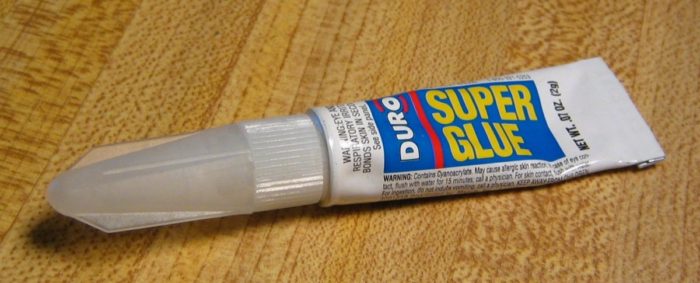
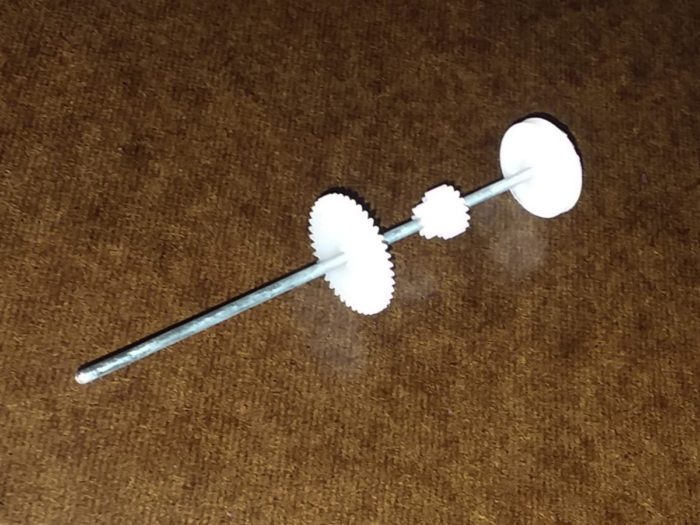
Adhesives are mostly used in hobby applications with plastic gearing. Not only because plastic gears cannot handle much torque, but also because the shaft sizes remain small in diameter.

Image Courtesy of Creative Commons

Excited to Learn More About Gears? 

Sign up for Mentored Engineer’s FREE Comprehensive Gear Design Master Class ($500 Value) that includes his Planetary Gear Calculator ($250 Value) and weekly Mentored Engineer Newsletter

The Comprehensive Gear Design Master Class is a 17 part series of videos and text where you will learn:

  • How to size gears so they mesh
  • Calculate the stress on the gear teeth
  • Calculate gear ratios in planetary system

After completing this course you will be able to correctly design and spec gear boxes for your applications the first time.

The course and the calculator have a combined value of over $750! for FREE

We respect your email privacy

As the shaft diameter increases the relative strength of the glue joint and the shaft strength are equal at roughly 3/16″ (5 mm) when using a conservative glue strength of 1000 psi (7 N/mm) and a shaft of C1018 steel (54 ksi, 370 MPa).

Conclusion: using adhesives is a good choice for small shafts

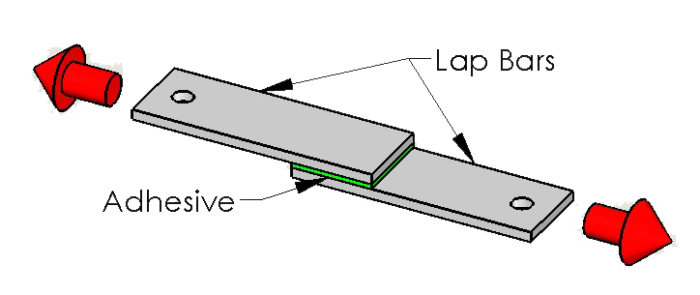
As mentioned, most adhesive manufacturers will advertise a lap shear strength of at least 1000 psi and some as high as 3000+ psi. A lap shear test is done by having two long skinny bars attached together with the glue over a measurable area. The ends of the bars are pulled apart until failure. The force is divided by the area and the result is the lap shear strength.

I usually design around the low number of advertised shear strength here as there are many factors at play which can lower the actual strength. Among these are surface preparation, surface area application, temperature and humidity.

Before applying the adhesive, you will need to rough up the surfaces of the pulley and the shaft with some sand paper (~200 – 300 grit) or a fine file. This will give the glue small nicks to grab on to. You will then want to clean and degrease with a cleanser and then dry fully. I like to use brake cleaner usually because I have it around.

To figure out if your application will withstand the applied torque. Use the following formulas.

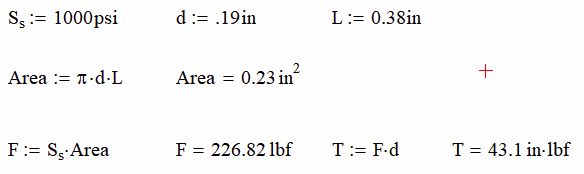
Where Area is the surface area between the shaft and the pulley, d is the shaft diameter, L is the overlap length for the shaft and pulley, F is the internal shear force between the shaft and pulley, Ss is the shear strength of the adhesive, and T is the applied (or maximum torque).

Using an average adhesive shear strength of 1000 psi, a diameter of 0.19 in, and overlap length of 0.38 in, we can find that our maximum Torque is 43.1 in lb.

There are three main cons of using the adhesive method to join a pulley to a shaft

  • The torque is limited by the diameter and adhesive strength as already mentioned
  • There is the ability to have the shaft and pulley out of center and / or perpendicular. This can be minimized by the tolerance between the two, but not so tight that you would wipe off all the glue.
  • There is no way to adjust or replace the components without the possibility of damaging 1 or both components. Having adjustment is important and this method doesn’t allow for it at all.

Joining Shafts Together? Check out our guide to shaft couplers.

Press-Fitting

Press-fitting is a tried and true method of attaching gears to shafts. It has been in use in the railroad industry as a method to save money when wheel assemblies wear out or become out of round.

The main wheel weldment has a precisely machined diameter and then a thin band of hardened steel is applied around it. The band or “tire” is actually smaller than the machined surface. This allows the inexpensive band to be replaced from time to time instead of the whole wheel assembly.

The following video shows how the tire is removed from the wheel by using heat. The band will expand in diameter as the temperature rises. The wheel (inner diameter) will stay roughly the same size because it has a lot more mass and will radiate heat away faster.

At this point, the band can be pried off and a new one installed by the same method.

Because there is no mechanical lock on this, it is 100% based on friction and it can slip. Measuring and determining the press fit is difficult and assumptions usually need to be made.

Super Slow Free Online Shaft Press Fit Calculator or Go Pro

Where Pr is the pressure between the surfaces, δ is the amount of press fit, d is the shaft diameter, do is the outer diameter of the hub or gear, di is the inner diameter of the shaft (if hollow), μ is the coefficient of friction between the materials and E and ν are the Young’s Modulus and Poisson’s Ratio of the materials.

Press fit gears on a shaft

Heating up the material will increase the diameter; therefore, decreasing the amount of press fit, δ. This make the gear easier to get on or off, but the end result the same once it cools.

If doing this at home with plastic gears. Try heating them up in the oven at about 175° to 200° (79°C to 93°C) and then sliding them on the shaft.

This method is adjustable, but not easily and you may need to disassemble multiple components so that heat does not destroy them.

Cross Drilled Holes

Drilling a hole through both the gear hub and the shaft is a great way to get a lot of torque. It also prevents the shaft from being overloaded because the pin will shear (break) if the torque is too much. There are three main types of pins to use in this application listed below from weakest to strongest.

Cross Drilled Hole with Roll (Spring) Pin
  • Roll (spring or slotted) Pins – These are flat bars that have been rolled to a round shape. They tend to spring open (hence spring pins) allowing enough of a press fit so that the pin won’t slip out. I recommend these over the other two options.
  • Shear Pins – These pins are solid and have a notch at the midpoint where the pin is designed to fail at a specific force. It is important to get a pin where the notch will be at the same plane as the shaft diameter.
  • Dowel Pins – These are just high strength solid pins. If your hole is too big, you will probably have to glue these in place (shear pins too). If your application reverses direction or load, you can encourage the glue to fail prematurely and the pin to fall out.

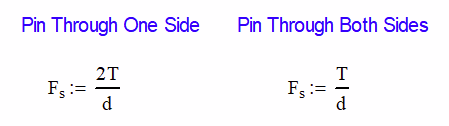
Each of the pins will have an advertised breaking strength and you can select the diameter and type based on the equations below. Fs is the shear force, T is the applied torque and d is the shaft diameter.

This method gives you lots of capacity to handle more torque, but is still doesn’t give any adjustment once the hole is drilled. If you mess up too many times, the shaft will look like Swiss Cheese.

On major benefit is that nearly anyone can make this joint. All you need is a drill, drill bits and a hammer. I recommend drilling a smaller diameter 1/16 – 3/32 first and check your alignment with a toothpick. If it is good, drill it out to the diameter you want. If not, rotate to another part of the shaft and try again.

Compression Hubs

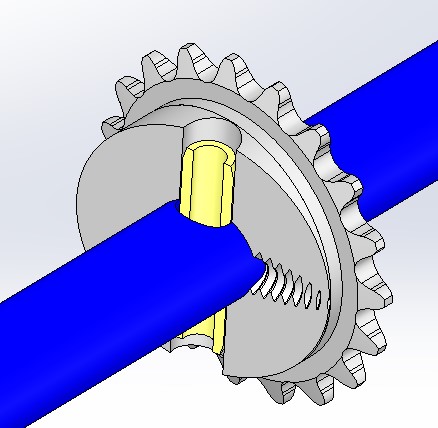
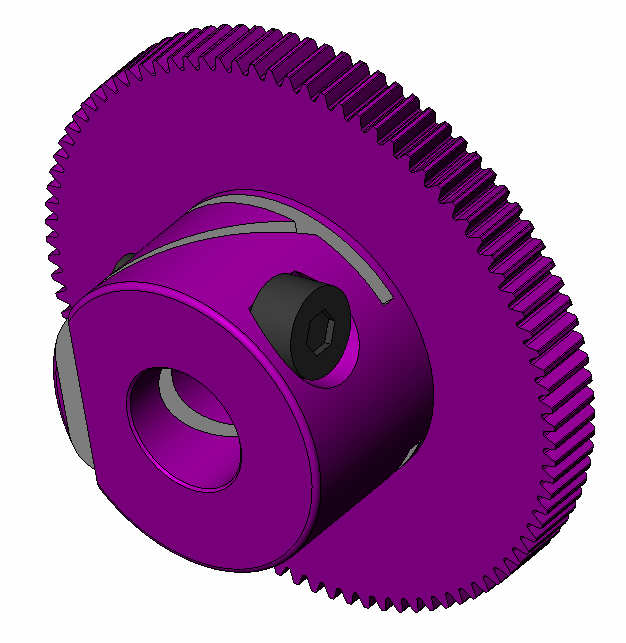
While not a common method of attaching gears to shafts, it is available. Once the gear is slid over the shaft, the set screw is tightened and friction will carry the torque. The coefficient can be reduced inadvertently due to oily shafts or the use of anti-seize. It is best to use dissimilar metals when using this method.

Compression Style Gear

The cost of making the reliefs in the components makes this type method cost prohibitive in most cases.

Just avoid this type of joint!

Set Screws

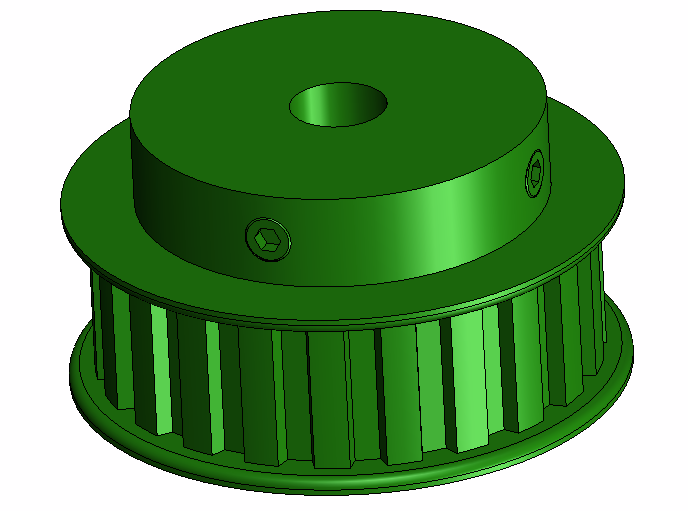
The set screw (only) method of attaching to a shaft is very common with timing pulleys, gears and sprockets.

Typical Set Screw Timing Pulley

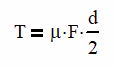
It is difficult to determine what kind of torque you can get out of a coupling like this. The result can vary wildly because of friction coefficient, applied torque, lubrication of the threads and set screw type. The basic equation is as follows:

Where T is the output torque, μ is the coefficient of friction, F is the normal force from one setscrew and d is the daft diameter.

Most people just tighten the set screw as much as possible. As long as the pulley doesn’t slip from excessive torque, everything will be all right. However when it does, you will quickly wear a groove into the shaft. This makes your shaft diameter smaller; thus reducing the maximum torque you can achieve.

The main benefit is that this method is 100% adjustable for rotation to the shaft and along its length. Generally, this method is only available with shaft sizes 1/2″ (13mm) or less.

Keyways

For most industrial applications the standard is keyed shafts.  By far any off the shelf gear will be available in a variety of bores sized with keys slots.  You can also buy them with unfinished bores and cut your own keyway if you like.

When selecting a bore size, make sure that you aren’t selecting a shaft that is too big for the for the gear.  Recently, I had a system that used a 10-tooth sprocket on a 1” shaft.  The system had some pressure spikes in it at startup and actually cracked the sprocket in half. 

It was able to do this so easily because the material between the outside of the hub and the keyway was only 1/8” thick.  We were able to double that to ¼ by adding one tooth. This is a situation where an involute spline would be a better choice (more on that later).

Most gears are held from sliding on the shaft with just one or two set screws.  Generally, one screw will be on the key and the other will be 90° to it and press against the shaft.  For spur gears, this is adequate, but for helical gears, there needs to be more of a positive engagement on the shaft to account for the side load.  Possible solutions are thrust bearings, tapered roller bearings or snap rings.

When in doubt, go with a keyed shaft.

Involute Splines

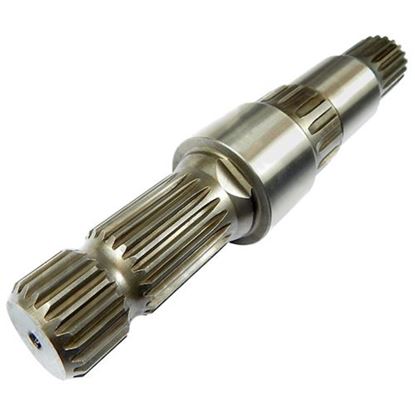
Involute splines are structurally better than keyways for transmitting high torques. Instead of one large key, we have many smaller keyways that evenly distribute the stress around the outside of the shaft better.

Image courtesy of Worthington Ag Parts

This can be a good and bad thing. It is good because the shaft won’t break as easily, but bad in the way that there is no mechanism that can safely fail if too much torque is transmitted.

An involute is the curve that is made when a string is wrapped around a cylinder and then the end of the string is traced as it is unwound. This is profile of the sides of each tooth on the spline.

The pros of this connection method is that large torques can be transmitted with ease and it is adjustable along the length of the shaft and can be oriented at many angles to the shaft. There are several cons including:

  • A set screw may still be needed
  • There is no fail-safe mechanism like a key to prevent too much torque from being transmitted
  • It is super expensive

Best Guide to Understanding SAE Shafts and Mounting Flanges

Taper lock bushings

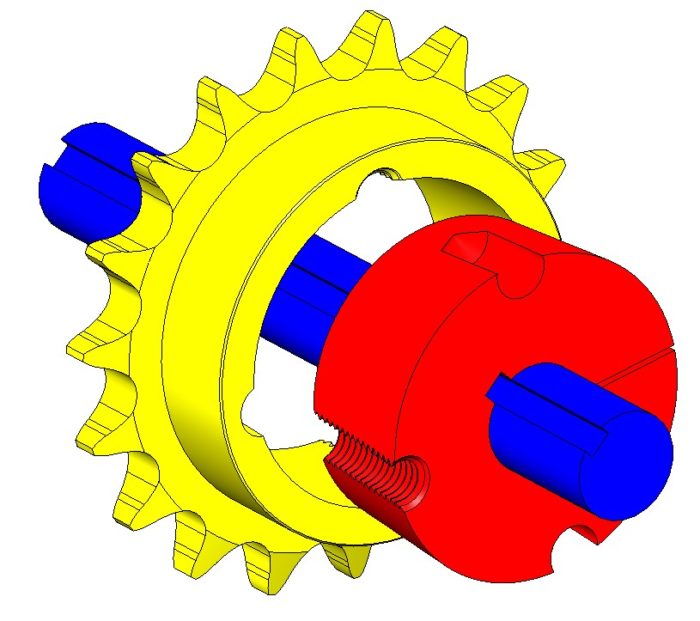
Taper lock bushings aren’t a new method of attaching to a shaft; they still use a key. But they are a different way to mount the sprocket to the shaft. Instead of 2 main parts, we now have 3. The sprocket, the shaft and the bushing.

Typical Tapered Lock Bushing

In the figure above, the red bushing will slide onto the shaft in the desired position. The sprocket will then be slid over the bushing until snug. Set screws will be inserted at the top and bottom locations. As the set screws are tightened, the taper will force the bearing gap (on right) shut and lock on the shaft.

There are three main benefits of this design:

  1. Low profile
  2. The bushing can be removed by inserting the set screw into the hole on the left and screwing it in.
  3. No anti-seize is required! This is the one application where the bushing can be removed without the use of anti-seize. This makes it perfect for environments where anti-seize may be detrimental. The food industry comes to mind here.

Conclusion

There are many different methods of attaching gears, sprockets, cams and pulleys to shafts. Some, like adhesives and press fitting, are designed more for hobby applications. Others are clearly meant to survive out in the real world, like keyed shafts, taper bushings and involute splines.

FREE Hydraulic Hose Size, Pressure Drop and Calculator

Oil Type Equivalent Roughness, ε (ft)
(0.0001 - 0.00015)
Operating
Temp °F
Density (lb/gal)
Flow, Q (gpm) Kinematic Viscosity (cS)
Length, L (ft) Dynamic Viscosity (cP)
Hose Size
(in)
Hose Area
(in^2)
Velocity
(ft/s)
Reynolds
Number
Relative
Roughness
Friction
Coefficient
Pressure
Drop (psi)
Power
(hp)